South to the Island of Rapa
On 22nd September Saecwen took departure from Tahiti with our ultimate destination being Southern Chile – over 4,000 miles to the southeast. With the SE trade winds still blowing fresh (directly from the direction in which we wanted to sail), we had no option but to first head south to try and find the westerlies of the Southern Ocean that we hoped would ultimately drive our Pacific crossing.
With Heloise having headed to Asia for a long overdue visit to her business there, Charlie was now joined by Danny Mensch (Swedish American), Clemence Danis (French) and Tom Bott (a Brit). Although none of us had sailed together before, the new crew rapidly gelled into a great team, with Danny nobly taking on (in Heloise’s absence) responsibility for managing our provisions – which for 4,000+ mile passage was a hugely important task.
For the next six days the boat was largely hard on the wind, which at times was gusting up to over 25 knots. These are normally conditions we go out of our way to avoid. However, we were all amazed at how well Saecwen behaved on her first prolonged offshore windward passage. Whilst managing an average of 5 knots of boat speed against the 2-3m swell, she was remarkably comfortable down below and shipboard life was able to continue relatively undisturbed.
The crew were soon all getting familiarised with the workings of the boat with reefs being taken in and out on a regular basis. One highlight of the passage was Clem catching an extraordinary scary looking fish called a black snake mackerel, which we learnt had come up from over 1000 meters of depth to feed on the surface at night.

As we headed south we were also all acutely conscious of a rapid drop in temperature. On day three we crossed the Tropic of Capricorn, officially leaving the tropics and by day six the sea temperature had dropped from Tahiti’s 27 degrees to 20 degrees. We left Tahiti barefoot in shorts and tee shirts – and within five days we were in fleeces, woolly hats and foul weather gear.
With our route taking us close to the Island of Rapa, it would have been a tragedy not to have visited this most remote of all French Polynesia’s islands and at dawn on day seven we made landfall off its mountainous profile, securing to the island’s quay later in the morning.

Rapa is totally unique both within French Polynesia and specifically within its neighbouring Austral Islands. With a population of only 400, it has its own language (totally different to that spoken in Tahiti) and traditions and culture. The island comprises a large volcanic crater which is breached to the sea to the east, creating a magnificent natural harbour that is reminiscent of a sea loch from the west of Scotland.
It also hosts, along with Easter Island, the most significant archaeological sites in the South Pacific with its ridge lines being adorned with over 12 ancient hill forts, not dissimilar to the broachs of Scotland. When we hiked up into the mountains to visit two of these forts we found it difficult to reconcile the island’s delightful gentle people to the centuries of inter-village warfare that must have ensued to justify the time and resources needed to construct such formidable military strongholds.
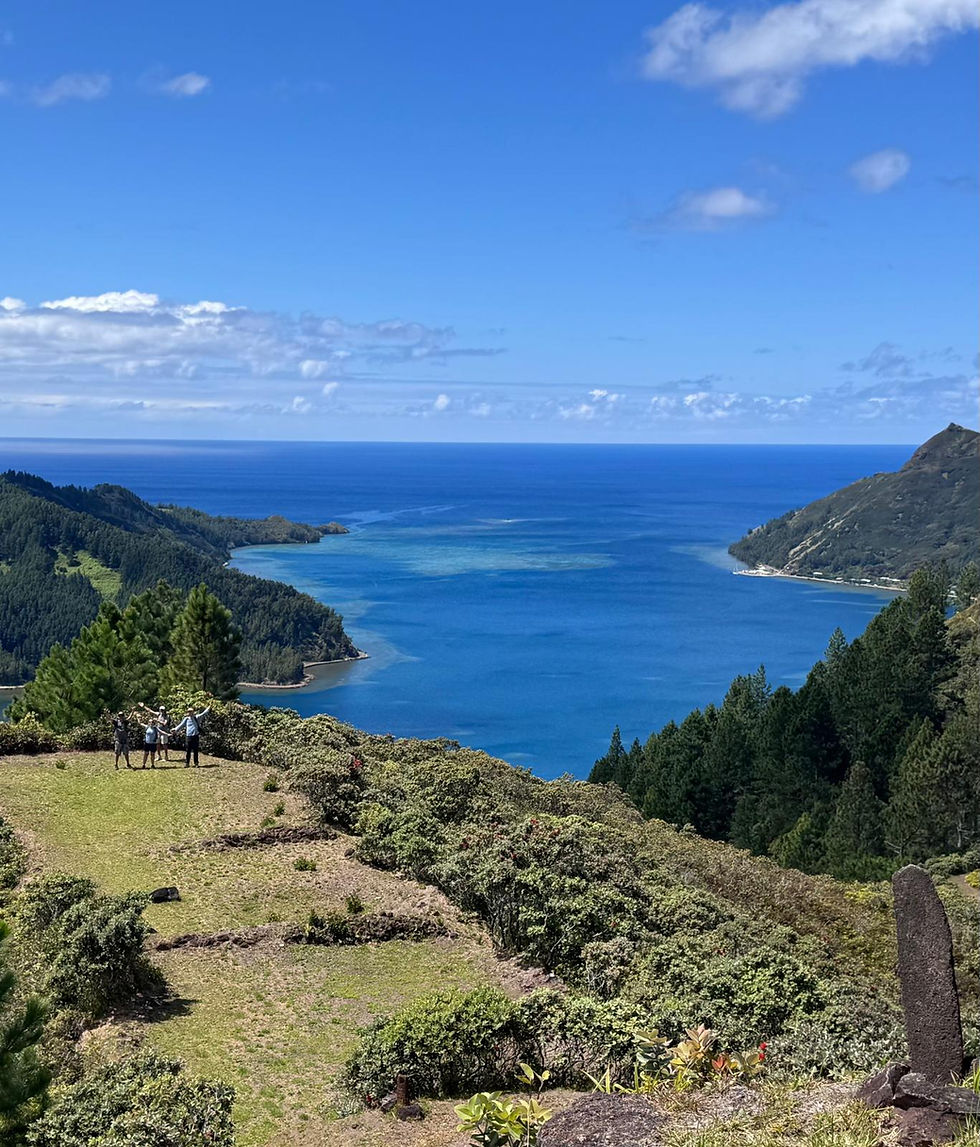
Given Rapa’s remoteness, the island hosts a small number of birds that are totally unique to the island. These include the Rappa Puffin (which we failed to spot) and the beautiful Koko (Ptilinopus huttoni), which feasts of the island’s rich crop of mulberries.

From the moment of arrival at Rapa we were overwhelmed by the locals’ hospitality and kindness. We were the third yacht to pass through this year and immediately on our arrival the word was put out across the island to provide fresh provisions for our pending passage to Chile. Basketfuls of locally grown papaya, aubergines, grapefruit, beetroot, spring onions, tomatoes and cabbages were soon to appear.

We also spent a happy morning picking huge quantities of luscious ripe mulberries, although we were sad that we had missed the pending abundant harvest of peaches, apples and pears by a couple of months.

We were fascinated to learn that the island’s economy is run as a cooperative whereby its natural resources of fruit, vegetables and fish are shared across the community with no financial transactions occurring within their exchange. We were also told firmly that it was forbidden to ask strangers for money, so everything we received was gifted to us by the islanders.
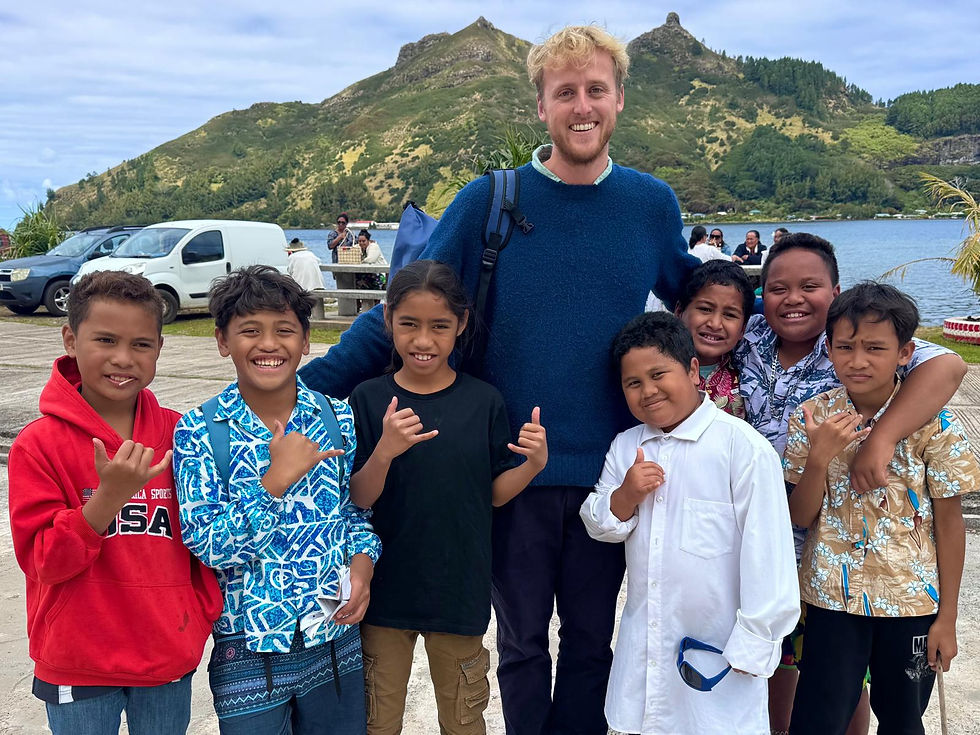
On our last day on the island we were given the most incredible send off. This started with the village Sunday church service, after which a huge communal feast, with much singing, ensued. We could not believe the way in which this tiny remote island community had taken us into their hearts and when it came to say goodbye, we had so many new friends to thank.
On the evening of 3rd October Saecwen headed back out into the Ocean to continue her adventures. Of the many islands we have now visited in on our travels, Rapa has to be the most unique and remarkable.


We love sharing your adventures, and can't wait for the next adventure. It was a wonderful surprise to catch up with Charlie recently.
Hi friends, your tale brings back many memories, both of days going to windward in a bit of a blow and the fascination of going to an island that is seldom visited. what a lovely experience for you.
Happy times and we both wish you a good voyage to Chile. David and Annette
Wow, this was an absolutely fascinating read! What a remarkable place (I love that it's a cooperative economy) and such a warm welcome and send off. And that bird you captured a photo of was just stunning. Safe and happy travels onward.